
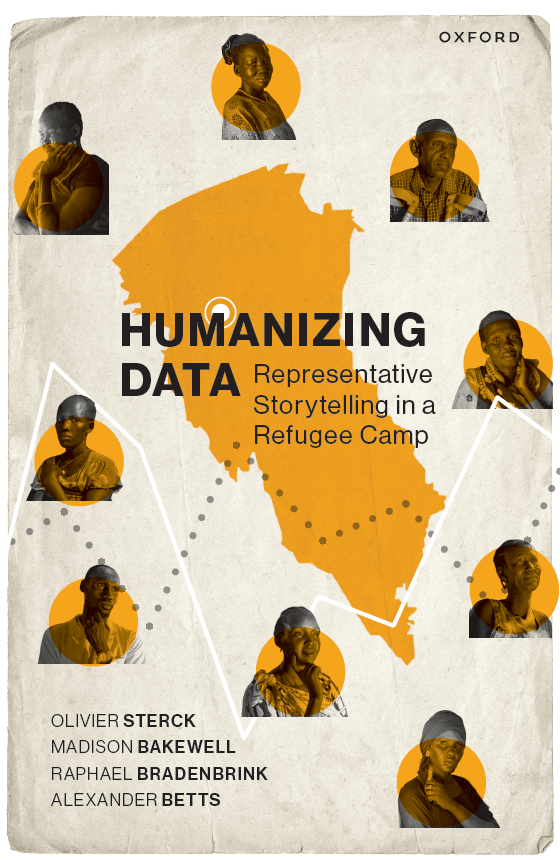
Humanizing Data:
Representative Storytelling in a Refugee Camp
Forthcoming, Oxford University Press
People often encounter media stories about refugees. These accounts disproportionately focus on those who come by boat or embark on long journeys to reach Europe or North America. They are usually based on storytelling at the extremes, in which refugees are portrayed as villains, victims, or heroes. They are often stereotyped as illegal migrants or criminals. Or they depict outlying examples of extreme hardship or success against the odds—the refugee athlete or the refugee entrepreneur.
These accounts may be authentic, but by only showing the extremes, they risk skewing public understanding about the day-to-day reality faced by many refugees around the world. More than 70% of the world’s refugees live in low- and middle-income countries. Most now reside in cities, but a sizeable minority—almost a quarter—live in refugee camps. Most members of the public will never travel to the countries that host large numbers of refugees, countries like Iran, Jordan, Bangladesh, Uganda, and Colombia, let alone visit a refugee camp.
The aim of this book is twofold. First, to address the way refugees’ stories are often distorted or selectively represented in media and political discourse by providing an alternative approach to storytelling that is both academically rigorous and accessible. Second, to offer a more representative account of what it is like to live in a refugee camp.
We focused on one of the world’s largest camps, Kakuma refugee camp in Kenya, which hosts nearly 300,000 residents. In Kakuma, we developed and implemented a new research methodology that we call ‘Representative Storytelling’. This methodology integrates quantitative and qualitative methods in a novel and complementary way. It seeks to humanize data by linking statistics to real stories, and to discipline stories by situating them within representative data.
To understand the diversity of lives in Kakuma, we first collected representative quantitative data on the camp population, interviewing a sample of over 1,000 refugee households whose characteristics mirrored those of the entire camp. We then ranked the households according to their income level and invited those located at each decile of the income distribution to participate in in-depth interviews.
Rose, Celina, Malual, Thijin, Elizabeth, Ayen, Nyaliak, Abdirizak, and Maker live in those nine households. The book tells their stories in their own words. Rather than being chosen because they represent a sensationalist story of triumph or disaster, they represent a particular income level within the broader population. Income serves both as a measure to situate households and as a lens through which we examine inequality and diversity.
In each chapter, we situate the experiences of the nine selected refugees against the backdrop of broader population data. How are their experiences of food security, health, and access to employment representative of the wider camp population? Our hope is that this approach enables readers to build a broad, representative understanding of what everyday life is like in the Kakuma refugee camp.
More info: https://www.refugee-stories.com/
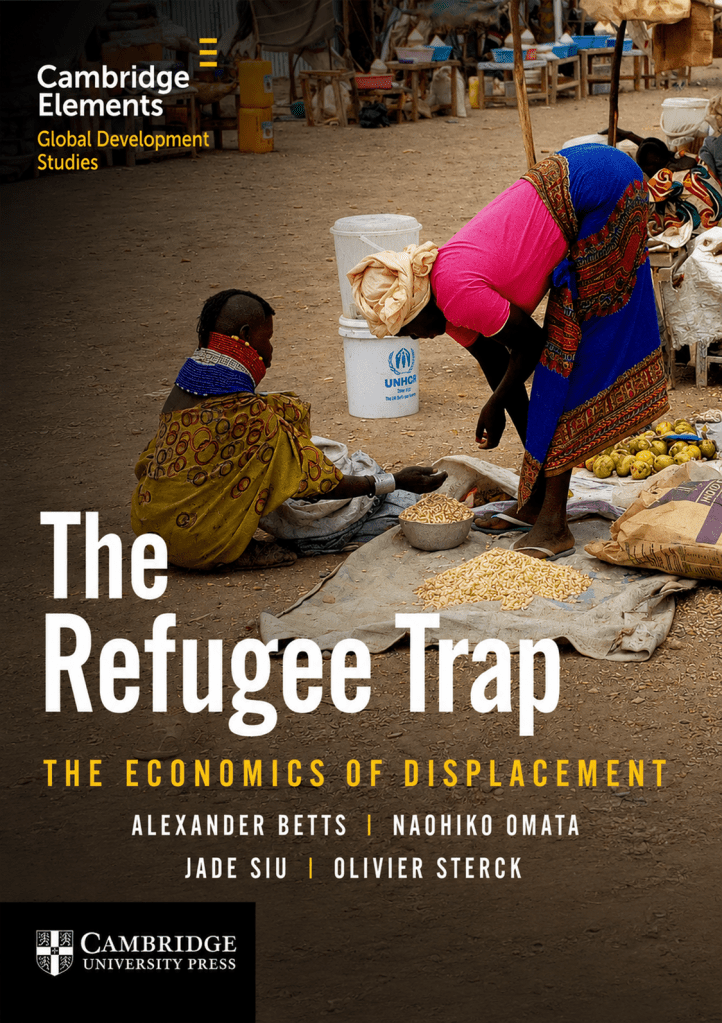
The Refugee Trap:
The Economics of Displacement
Forthcoming, Cambridge University Press
Refugee movements are one of the defining issues of the Twenty-First Century. But what difference does it actually make to be a refugee? To what extent are refugees economically distinctive compared to citizens or other groups of migrants? Drawing upon original data collected in camps and cities across East Africa,
The Refugee Trap shows that becoming a refugee changes the economic constraints people face in important ways; they confront a series of poverty traps that make them systematically worse off compared to citizens.
These relate to trauma, dispossession, uprootedness, and rights. By understanding the mechanisms underlying these traps, we can in turn identify the policy interventions needed to support restoration, and thereby address the sources of economic disadvantage that result from forced displacement. This title is also available as Open Access on Cambridge Core.
More information: https://www.cambridge.org/core/elements/refugee-trap/979A132CB0D407870886FEC1C2725840

